

Visiting Green Power Station: Share Power Takes SEU Interns to Gaoqiao Fishery‑PV Project
From August to September 2026, five interns from Southeast University joined the company for a four‑week corporate internship. As a key component of internship training, on September 14, Bian Yaping, General Manager of the Human Resources Department of Share Power, led the five interns on a study tour to the site of CHN Energy Gaoqiao Fishery‑PV Complementary Photovoltaic Project.
Upon arrival at the project site, Mr. Huang, Project Lead, and Engineer Han of the electrical discipline gave the visiting group a warm reception. They guided the group through the on‑site project department, the step‑up substation and the photovoltaic power generation zone. The interns gained first‑hand insight into the construction and operation of the new‑energy power station, as well as the technical equipment and management standards on the front line of power production. Ranging from the layout of photovoltaic arrays and the application of flexible support technology, to the operating status of inverters and step‑up transformers, from real‑time monitoring via the centralized control system to the implementation of on‑site safety protocols, the interns obtained an intuitive understanding of the fishery‑PV complementary model that features “power generation above water and aquaculture underneath”. They also acquired concrete knowledge of daily operation‑maintenance and safety management for new‑energy power stations.
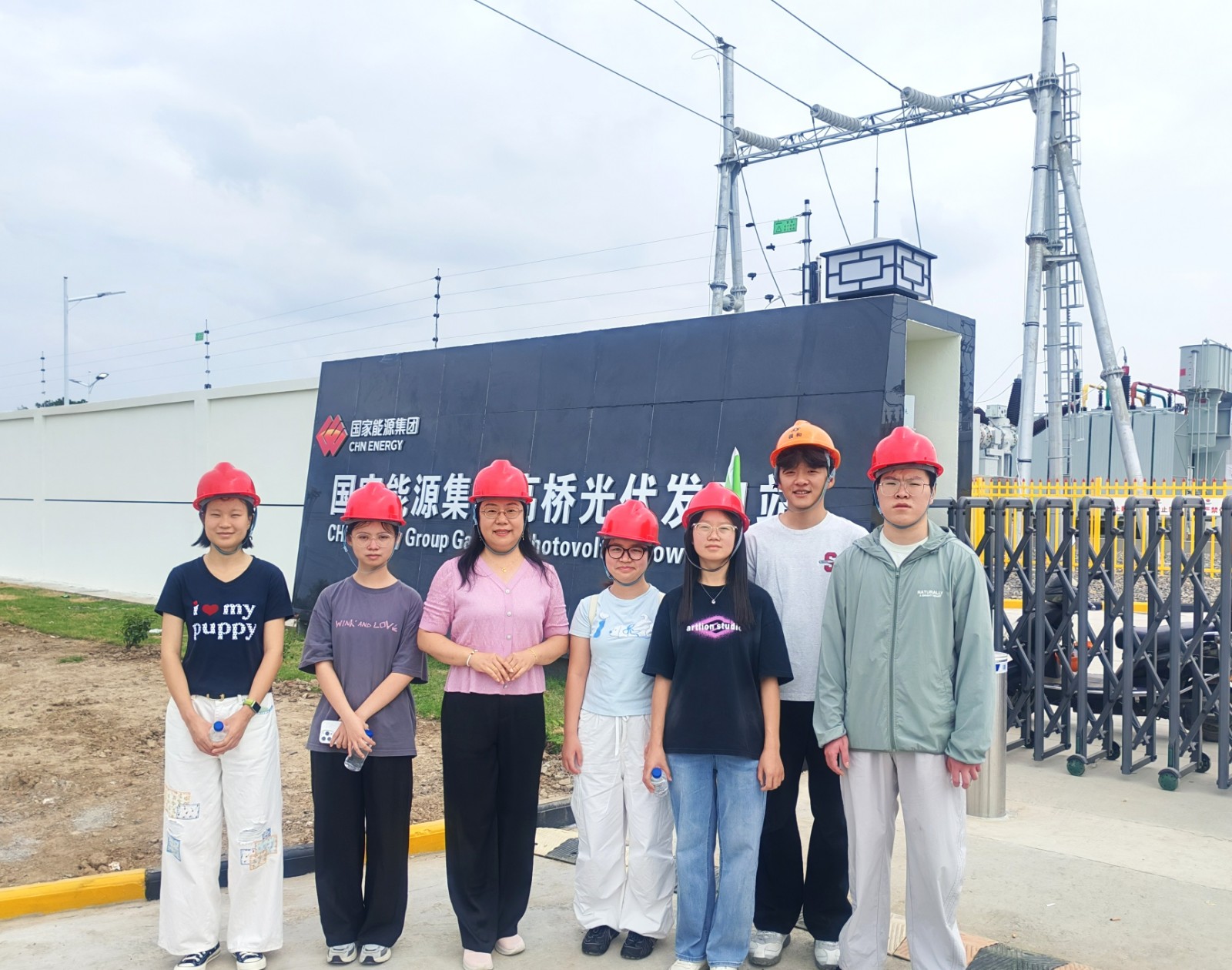
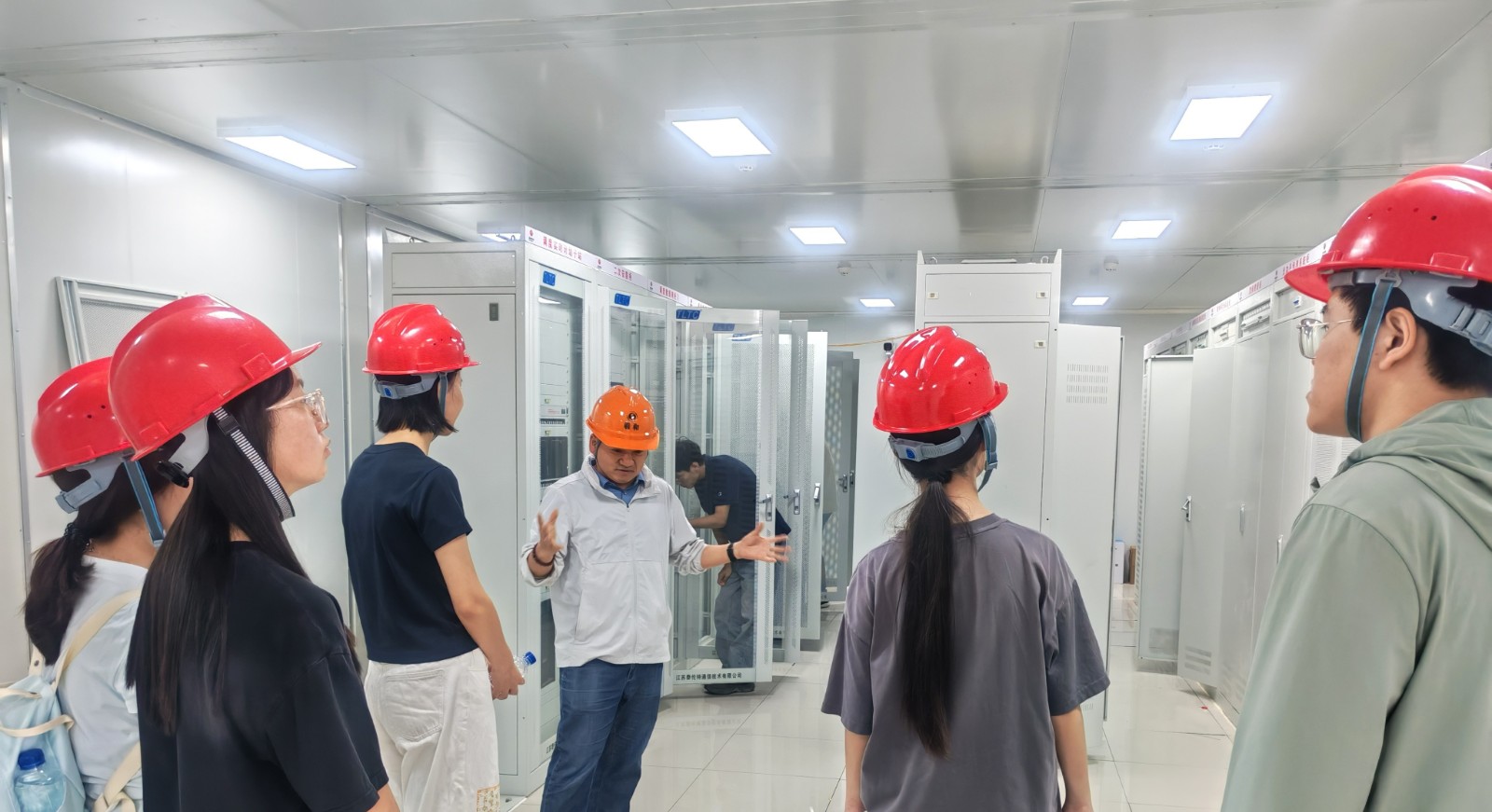
Entering the power‑generating area of the photovoltaic station, all visitors put on safety helmets as required and went through on‑site safety briefings. Supported by on‑site equipment, project technicians illustrated the flow of electric power across photovoltaic power generation, collection, step‑up transformation and power delivery. They explained the role of energy‑storage devices in peak‑load shifting and improving grid‑integration consumption of new‑energy power, as well as the voltage transformation and power transmission functions undertaken by the 110 kV main transformer. Inside the step‑up substation, functions including centralized monitoring, data acquisition and remote dispatching were demonstrated. Real‑time refreshed operating parameters made the “invisible electricity” tangible and observable. While appreciating the advanced equipment, interns also came to appreciate the stringent requirements for safety, stability and precision within the power system. They built a clear picture of “how a power station operates and what responsibilities each position bears”. The site boasts complete supporting equipment and stable system performance, forming a full‑process power‑generation system covering power generation, energy storage, power transformation and monitoring.
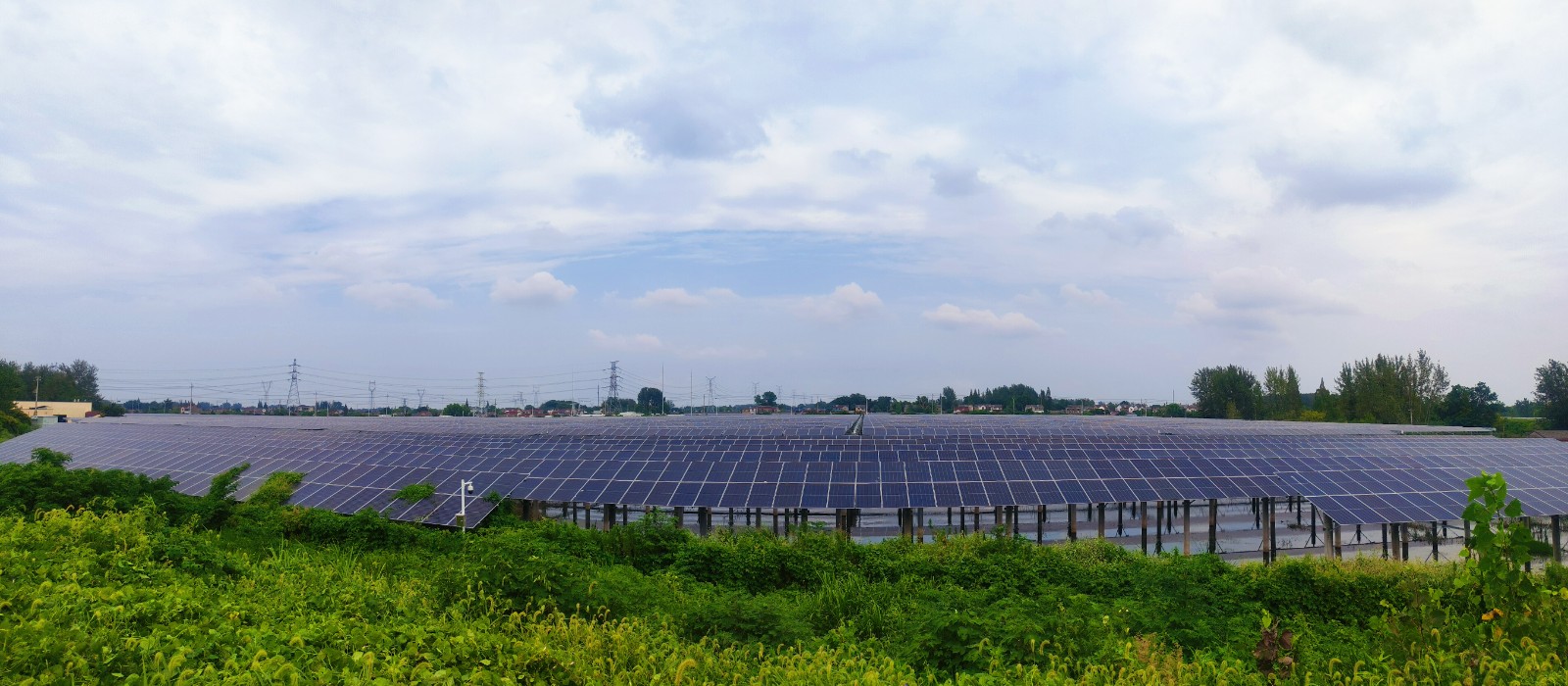
In the photovoltaic field, rows upon rows of neatly‑arranged photovoltaic modules set against surrounding greenery and residential houses paint a vivid picture of harmonious co‑existence between “new‑energy industry and rural areas”. Built along waters, the project features vast arrays of deep‑blue solar panels stretching across the landscape. Towers stand in the distance with overhead power lines criss‑crossing to form a complete power transmission network. The group stopped to observe and listened to explanations from the project lead. They got up‑close with offshore photovoltaic power‑generation facilities, learned about the structural layout of solar panels and site‑utilization patterns, and experienced the green‑development philosophy of “generating power over water and intensive utilization of water areas”. They gained more concrete perceptions of clean‑energy conversion via photovoltaic power and real‑world application scenarios for new‑energy solutions.
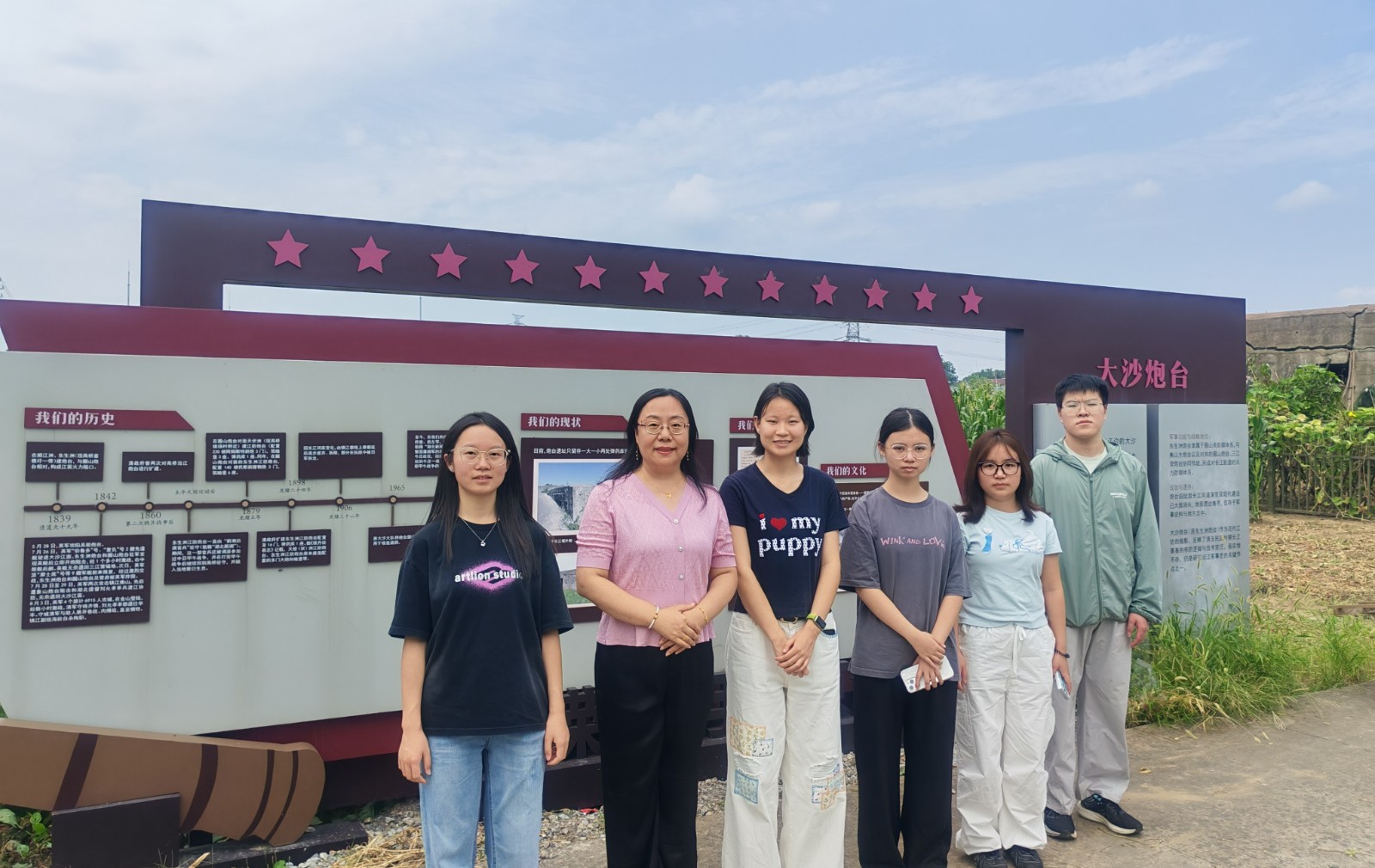
Subsequently, the visiting group headed for Dashan Fort, a red‑education historic site in Gaoqiao Town. At the fort ruins, they learned about its strategic position within the “Chuishan Pass” defense line together with Chuishan Fort on the southern bank and Sanjiangying Fort on the opposite bank, as well as its historical role in jointly resisting British invasion during the First Opium War in 1842. Historic relics such as the fort foundation and remnants of ammunition depots were on display. The time‑weathered defensive works brought this “frozen chapter of history” to life. While feeling the weight of this river‑defense heritage, visitors also understood the requirements for terrain deployment, firepower arrangement and coordination within modern coastal‑defense systems.
All visitors stood before the ruins. The soil underfoot seemed to echo the reverberations of past times; yet just nearby, plump fruits and vegetables grew peacefully in the farmland under sunlight.
This study tour enabled interns to witness the green‑development achievements of the fishery‑PV complementary project on‑site and deepen their understanding of the prospects for the clean‑energy industry. Meanwhile, they reflected on extraordinary past events at the historic site and received ideological inspiration. The interns expressed that they would translate insights gained from this visit into motivation for self‑improvement and apply what they had learned to their future studies and work.